


Clinical Operations Staffing: How Flexible CTM and CQA Teams Help Keep Clinical Trials on Track
By Jacob Cassinelli (Business Development Director) Every clinical trial depends on more than a strong protocol. It depends on the people responsible for executing it. Clinical Trial Management (CTM) and Clinical Quality Assurance (CQA) professionals coordinate studies across sites, oversee CRO performance, monitor quality systems, prepare organizations for inspections, and help ensure clinical trials meet regulatory requirements from study start-up through closeout. As development programs become more complex and timelines continue to compress, these teams are carrying more responsibility than ever. At the same time, experienced clinical operations professionals remain difficult to hire, creating workforce gaps that can slow studies and increase pressure on internal teams. For biotechnology companies, pharmaceutical manufacturers, medical

How Clinical, Regulatory, and Biometrics Teams Need to Work Together to Keep Trials on Track
By Allena Ball, Business Development Director at Orbis Clinical Clinical trials rarely fall behind because of a single major issue. More often, delays begin with small disconnects between teams that grow into larger challenges over time. A protocol amendment takes longer than expected. Site activation stalls. Data quality concerns emerge late in the study. Regulatory documentation requires additional revisions. Before long, timelines shift, budgets increase, and milestones become more difficult to achieve. Keeping a study on track requires strong execution across every stage of clinical development. That only happens when Clinical Operations, Regulatory Affairs, and Biometrics work together from the earliest planning

What Sponsors Look for in Clinical Trial Talent (and Why Most Candidates Miss It)
By Jessica Leveille (Practice Lead), Leslie Capell (Recruitment Practice Lead, Biometrics), and Neha Potdar (Manager of Recruitment & Site Management and Manufacturing Practice Lead) The competition for clinical trial talent remains strong, but landing an interview or receiving an offer often comes down to more than a candidate's technical qualifications. Sponsors are building teams that can navigate increasingly complex studies, collaborate across functions, and keep programs moving despite changing timelines and unexpected challenges. While experience opens the door, the way candidates communicate that experience often determines what happens next. Many professionals spend interview time walking through job responsibilities. Sponsors are listening for
Orbis Clinical Recognized for Excellence in Life Sciences Staffing and Talent Support
At Orbis Clinical, great recruiting has always been about more than filling positions. It's about understanding complex hiring needs, building meaningful relationships, and creating experiences that help both organizations and professionals succeed. That's why we're proud to announce that Orbis Clinical has earned ClearlyRated's 2026 Best of Staffing Client and Talent Awards, recognizing exceptional service based entirely on feedback from the people we serve. These awards are especially meaningful because they come directly from our clients and talent. To qualify, firms must meet strict survey participation requirements and achieve a Net Promoter Score® (NPS) of 50% or higher. Because NPS measures a respondent's
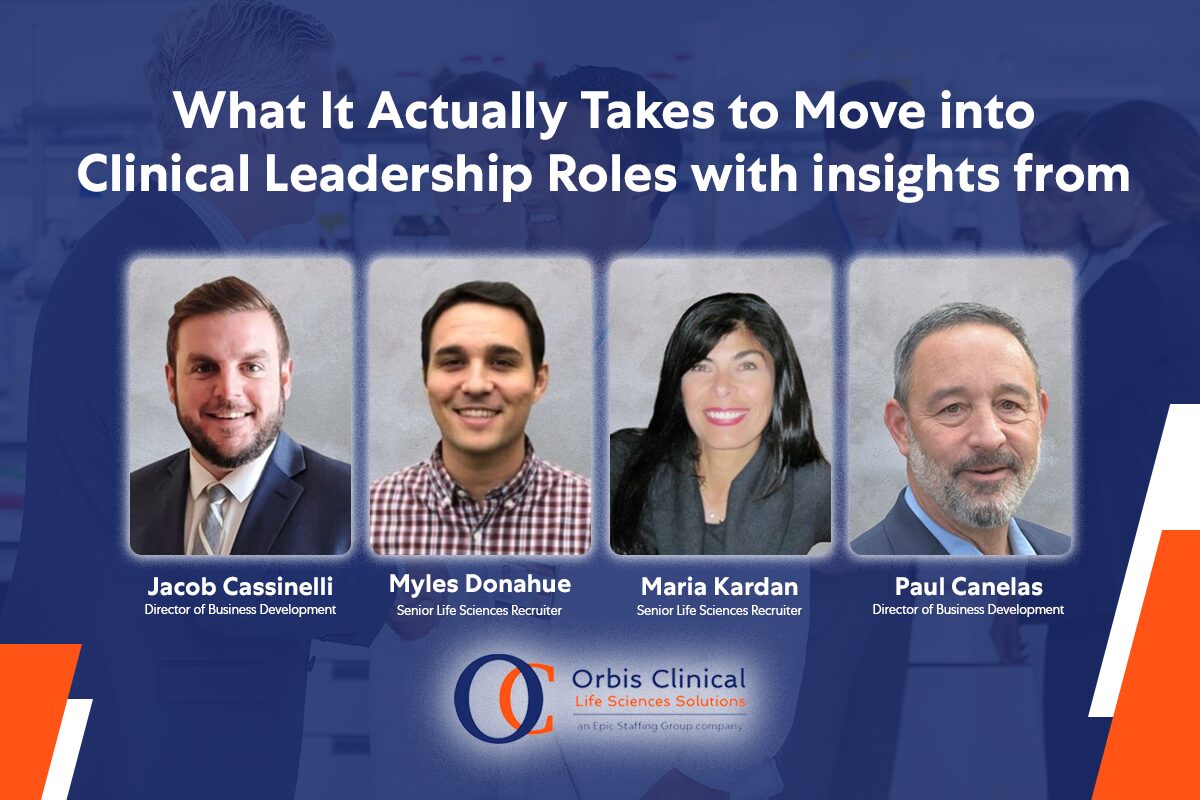
What It Actually Takes to Move into Clinical Leadership Roles (According to Hiring Managers)
By Paul Canelas (Business Development Director), Jacob Cassinelli (Business Development Director), Myles Donahue (Senior Life Sciences Recruiter), and Maria Kardan (Senior Life Sciences Recruiter) For many clinical research professionals, advancing into clinical leadership roles is a natural career goal. Yet despite years of experience, strong technical knowledge, and successful study execution, many candidates find themselves wondering what hiring managers are really looking for when leadership opportunities become available. The answer is often more nuanced than job descriptions suggest. While experience and technical expertise remain important, hiring managers consistently evaluate qualities that extend beyond operational execution. They want leaders who can influence teams, navigate

Not Your Old FSP: How Embedded Expertise Is Changing the Way Life Sciences Teams Scale
Growth is returning across the life sciences industry, but many organizations are approaching expansion differently than they did just a few years ago. Teams are being asked to move programs forward quickly while remaining disciplined about headcount, operational costs, and long-term hiring commitments. At the same time, critical functions such as clinical operations, drug safety, regulatory affairs, and biometrics remain highly competitive areas for talent acquisition. This combination of pressure and caution is forcing many biotech and pharmaceutical companies to reevaluate how they build and support their teams. As a result, the Functional Service Provider (FSP) model is gaining renewed attention. Not as a large-scale outsourcing model, but

The Evolution of Regulatory Affairs Careers in a Global Biopharma Landscape
By Jessica Leveille, Director of Life Sciences Recruitment at Orbis Clinical Regulatory affairs careers have undergone a significant transformation as the biopharma industry becomes more global, data-driven, and fast-moving. What was once viewed primarily as a compliance function is now a strategic driver of product development and commercialization. As regulatory complexity increases, so does the demand for professionals who can navigate evolving guidelines while contributing to broader business objectives. Understanding this shift is critical for both professionals exploring regulatory affairs careers and organizations looking to build high-performing teams. How Regulatory Affairs Careers Have Evolved Over the Last Decade One of the most notable shifts in regulatory affairs

More Than Just Clinical: The Life Sciences Staffing Spectrum
By Keytrice Castro, Business Development Specialist at Orbis Clinical When people think about life sciences staffing, the focus often lands on clinical roles. Clinical research associates, coordinators, and scientists are indeed essential and are often the most visible contributors during trial execution. However, bringing a therapy to market involves far more than clinical success. Behind every approval, launch, and commercial milestone is a network of professionals working across finance, regulatory, operations, legal, and technology. These functions shape how efficiently organizations move from development to real-world impact. This broader view reflects a growing shift in the market. Life sciences organizations are moving away from single-function staffing support and toward partners who can support talent needs across

Resume Strategies That Make Life Sciences Candidates Stand Out
Practical guidance for professionals in Clinical Operations, Drug Safety, Medical Affairs, Biometrics, and other Life Sciences disciplines By Neha Potdar (Manager of Life Sciences Recruitment), Jessica Leveille (Director of Life Sciences Recruitment), and Melissa Douglas (Sr. Vice President of Recruitment) In today’s contract-driven life sciences hiring market, even highly qualified life sciences candidates can be overlooked if their resumes fail to communicate their value quickly and clearly. Life sciences recruiters at Orbis Clinical review countless applications each week, and they emphasize that small details often determine who advances. From showcasing specialized skills to structuring experience effectively, the right strategies can dramatically improve visibility. Many of today’s most urgent hiring needs sit within Clinical Operations, Drug Safety, Medical Affairs, Biometrics, and more. In these high-volume,

Contractors vs. Direct Hire: What Life Sciences Companies Need to Know
By Ryan Jacklin (General Manager), Melissa Douglas (Senior Vice President of Recruitment), and Brandon Haas (Director of Operations) Hiring decisions in the life sciences industry are rarely one-size-fits-all. Between evolving studies, shifting timelines, and constant pressure to move quickly without sacrificing quality, companies must be strategic about how they build their teams. One of the most common questions life sciences organizations face is whether to bring on contract talent or invest in direct hires. Understanding the advantages of each approach can help life sciences companies stay agile, compliant, and competitive. Why Contractors Play a Critical Role in Life Sciences Cost is often the first and most immediate advantage of utilizing contractors. When a contractor