What It Actually Takes to Move into Clinical Leadership Roles (According to Hiring Managers)
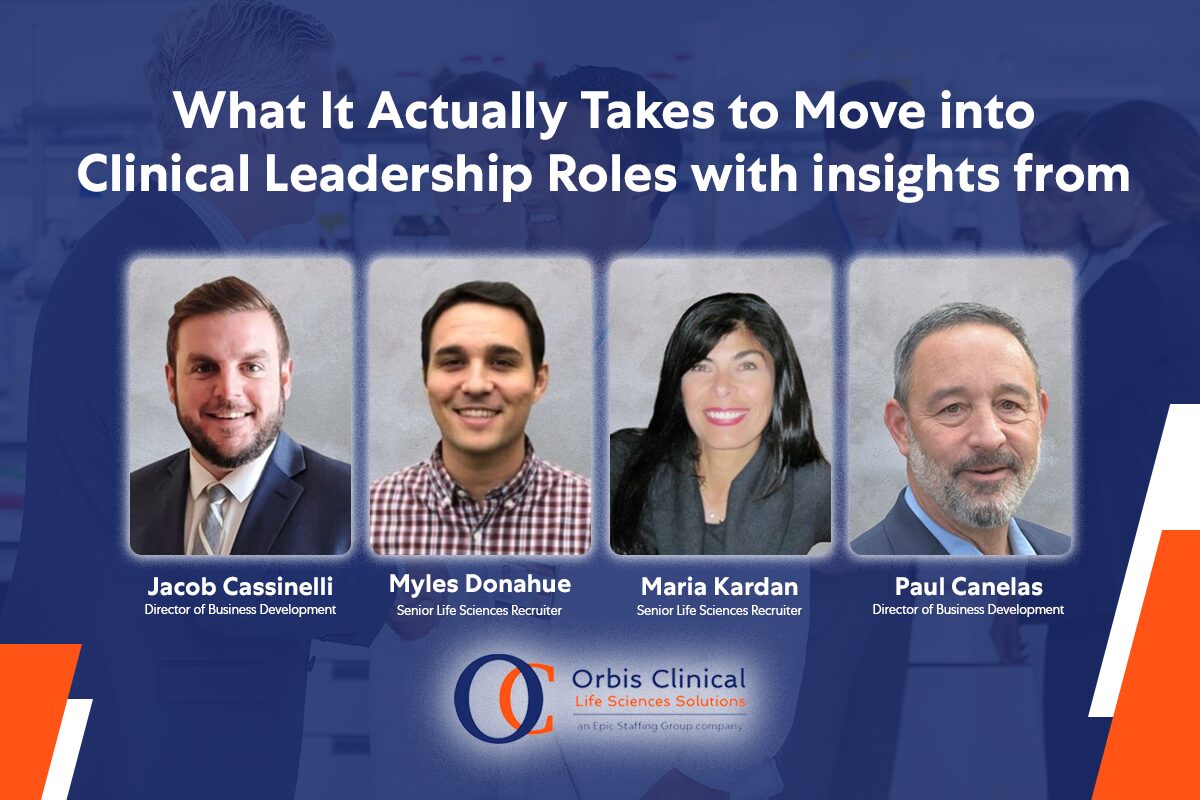
By Paul Canelas (Business Development Director), Jacob Cassinelli (Business Development Director), Myles Donahue (Senior Life Sciences Recruiter), and Maria Kardan (Senior Life Sciences Recruiter)
For many clinical research professionals, advancing into clinical leadership roles is a natural career goal. Yet despite years of experience, strong technical knowledge, and successful study execution, many candidates find themselves wondering what hiring managers are really looking for when leadership opportunities become available.
The answer is often more nuanced than job descriptions suggest.
While experience and technical expertise remain important, hiring managers consistently evaluate qualities that extend beyond operational execution. They want leaders who can influence teams, navigate challenges, build trust across stakeholders, and create environments where studies and people can succeed.
To better understand what separates strong individual contributors from future leaders, we gathered insights from Orbis Clinical team members who work closely with hiring managers and clinical research organizations every day. Their perspective reveals a consistent theme: leadership potential is often demonstrated long before someone receives a leadership title.
Clinical Leadership Roles Require More Than Technical Expertise
One of the most common misconceptions about leadership advancement is that it happens automatically after reaching a certain number of years in the industry.
According to hiring managers, experience matters, but it is rarely the deciding factor.
The professionals who stand out are often the ones who consistently take ownership, solve problems proactively, and help move studies forward when challenges arise. They communicate effectively, remain calm under pressure, and understand how their decisions impact both project outcomes and the people involved.
Hiring managers frequently point to cross-functional collaboration, the ability to navigate difficult conversations, and a willingness to mentor others as indicators of leadership readiness. Clinical research leaders are expected to work effectively with sponsors, sites, CROs, and internal stakeholders while keeping studies on track.
Life sciences candidates who understand both the operational and interpersonal sides of clinical trials are often viewed as being ready for greater responsibility.
Future Clinical Leadership Roles Are Earned Before They’re Awarded
A consistent theme among hiring managers is that leadership potential is often visible long before someone officially becomes a manager or director.
Candidates who volunteer to lead initiatives, support colleagues, and step into challenges when needed tend to build credibility over time. They do not wait for authority to be assigned before demonstrating leadership behaviors.
The clinical research industry can be surprisingly interconnected. Reputations travel quickly, and the way professionals interact with colleagues, partners, and stakeholders often leaves a lasting impression.
Leadership opportunities are frequently influenced by professional relationships and trust. Life sciences candidates who consistently lend a hand, take initiative, and contribute positively to their teams create a ripple effect throughout their network. These qualities may not always appear on a resume, but they are often remembered when leadership opportunities emerge.
For life sciences professionals pursuing clinical leadership roles, every interaction becomes an opportunity to demonstrate judgment, collaboration, and professionalism.
Hiring Managers Look Closely at How You Influence Others
Technical accomplishments can demonstrate competence. Leadership potential is often demonstrated through influence.
When evaluating future leaders, hiring managers assess how candidates handle challenges, make decisions, communicate with others, and contribute to overall team success.
Some of the qualities most frequently associated with leadership readiness include:
- Initiative and accountability
- Strong communication skills
- Adaptability during change
- Problem-solving capabilities
- Cross-functional collaboration
- The ability to build trust
- A commitment to helping others develop
Organizations want leaders who can drive results while elevating the performance of those around them. The ability to influence without direct authority is often one of the strongest indicators that someone is prepared for greater responsibility.
Empathy Is Becoming a Defining Leadership Skill
The expectations placed on leaders continue to evolve.
While operational excellence remains critical, hiring managers increasingly value emotional intelligence and people leadership skills when evaluating candidates for clinical leadership roles.
Many of the candidates who stand out most are those who focus on team success rather than individual recognition. They communicate effectively, build trust across teams, and create environments where collaboration can thrive.
Strong leaders understand how to bring people together around shared goals while maintaining accountability and performance standards. They recognize that successful outcomes depend not only on processes and timelines, but also on the people responsible for delivering them.
As clinical research organizations navigate increasing complexity, leaders who can balance performance expectations with strong team engagement are becoming especially valuable.
Trust and Ownership Set Leaders Apart
Across every stage of clinical research, trust remains a common thread.
Hiring managers consistently highlight candidates who earn the confidence of sponsors, sites, CRO partners, and internal teams. These professionals become known for their reliability, adaptability, and ability to navigate challenges without losing focus.
Trust is not built through a single accomplishment. It develops through consistent actions over time.
Life sciences professionals who communicate transparently, follow through on commitments, and support team success often position themselves as natural leadership candidates. They take ownership when problems arise, proactively seek solutions, and help keep projects moving forward.
When organizations evaluate talent for advancement, those established relationships and reputations frequently carry significant weight.
For many professionals, the path into clinical leadership roles begins long before the interview process. It starts with how they show up every day.
How Orbis Clinical Supports Long-Term Leadership Growth
At Orbis Clinical, career conversations extend beyond the next placement.
As a specialized life sciences recruiting partner, Orbis Clinical understands the science, the stakes, and the realities of career progression across clinical operations, biometrics, regulatory affairs, and related disciplines. Our team combines deep industry knowledge with a relationship-driven approach to help professionals navigate their careers with purpose and clarity.
Because we work exclusively within life sciences, we have firsthand insight into the skills, experiences, and leadership qualities organizations are actively seeking. We help life sciences professionals understand how hiring managers evaluate leadership readiness, identify opportunities that align with their long-term goals, and prepare for the next stage of their careers.
Rather than focusing solely on immediate opportunities, our approach centers on long-term career alignment. Through lasting relationships, specialized expertise, and access to leading life sciences organizations, we help professionals position themselves for meaningful growth over time.
Whether someone is preparing for their first management opportunity or exploring more senior clinical leadership roles, our focus remains on helping them make informed career decisions that support lasting success.
The Path to Clinical Leadership Starts Before the Promotion
Advancing into clinical leadership roles is rarely determined by tenure alone. Hiring managers consistently look for professionals who demonstrate ownership, influence, empathy, adaptability, and the ability to build trust across diverse teams and stakeholders.
The most successful candidates often begin developing these qualities long before they receive a leadership title. By taking initiative, supporting others, strengthening relationships, and focusing on both operational excellence and people leadership, clinical research professionals can position themselves for the opportunities that define the next stage of their careers.
If you’re considering a move into clinical leadership roles, the right guidance and opportunities can make all the difference. Connect with Orbis Clinical to explore roles that align with your leadership potential and long-term career goals. Our team can help you understand how hiring managers evaluate readiness and position you for what’s next.
About Paul
 With more than 30 years of staffing experience, including 15+ years dedicated to the life sciences industry, Paul Canelas specializes in connecting top talent with organizations across pharmaceutical, biotechnology, cell and gene therapy, medical device, CRO, CDMO, and CMO sectors.
He delivers contract, contract-to-hire, direct placement, and project-based staffing solutions, supporting functions including clinical research, regulatory affairs, biometrics, pharmacovigilance, quality, manufacturing, medical affairs, commercial operations, and executive leadership. Combining deep industry knowledge with an extensive network, Paul is committed to helping companies build high-performing teams and professionals advance their careers.
About Jacob
 Jacob Cassinelli is the Director of Business Development at Orbis Clinical, where he leads strategic staffing partnerships across biostatistics, clinical operations, drug safety, and regulatory affairs. Since joining in 2019 as an Executive Recruiter, he has quickly advanced through the organization, earning recognition for his results-driven and relationship-focused approach. Based in Connecticut, Jacob is committed to delivering tailored solutions and long-term value to clients and consultants across the life sciences industry.
About Myles
 Myles Donahue is a Life Sciences Recruiting professional at Orbis Clinical, where he partners with biotech, pharmaceutical, and CRO organizations to connect top-tier talent across clinical operations, regulatory affairs, drug safety, biometrics, and related scientific disciplines. Since joining Orbis Clinical, he has focused on supporting both emerging biotech companies and global life sciences organizations by delivering tailored staffing solutions that align scientific expertise with evolving clinical development needs.
Based in the San Francisco Bay Area, Myles is known for his relationship-driven approach, market insight, and ability to translate complex hiring needs into high-quality talent matches. He is actively involved in supporting clinical research and drug development teams through strategic recruiting partnerships that help accelerate programs from early development through commercialization.
About Maria
 Maria Kardan is a Senior Recruiter with Orbis Clinical and a talent acquisition professional with more than 20 years of experience developing and executing successful recruiting strategies across both national and local markets. She has extensive expertise managing the full recruitment lifecycle, including sourcing, screening, interviewing, offer negotiation, placement, and onboarding.
Throughout her career, Maria has built a strong track record of identifying and attracting high-caliber talent through innovative sourcing techniques, including recruiting technologies, social media, direct outreach, networking, and employee referral programs. Her industry expertise is focused within the life sciences sector, with a specialization in Biometrics recruiting, including the placement of Biostatisticians, Clinical Data Managers, and Statistical Programmers.
Known for her relationship-driven approach, Maria partners closely with both candidates and hiring managers to deliver exceptional hiring outcomes while helping organizations build high-performing teams and achieve their talent acquisition goals.